
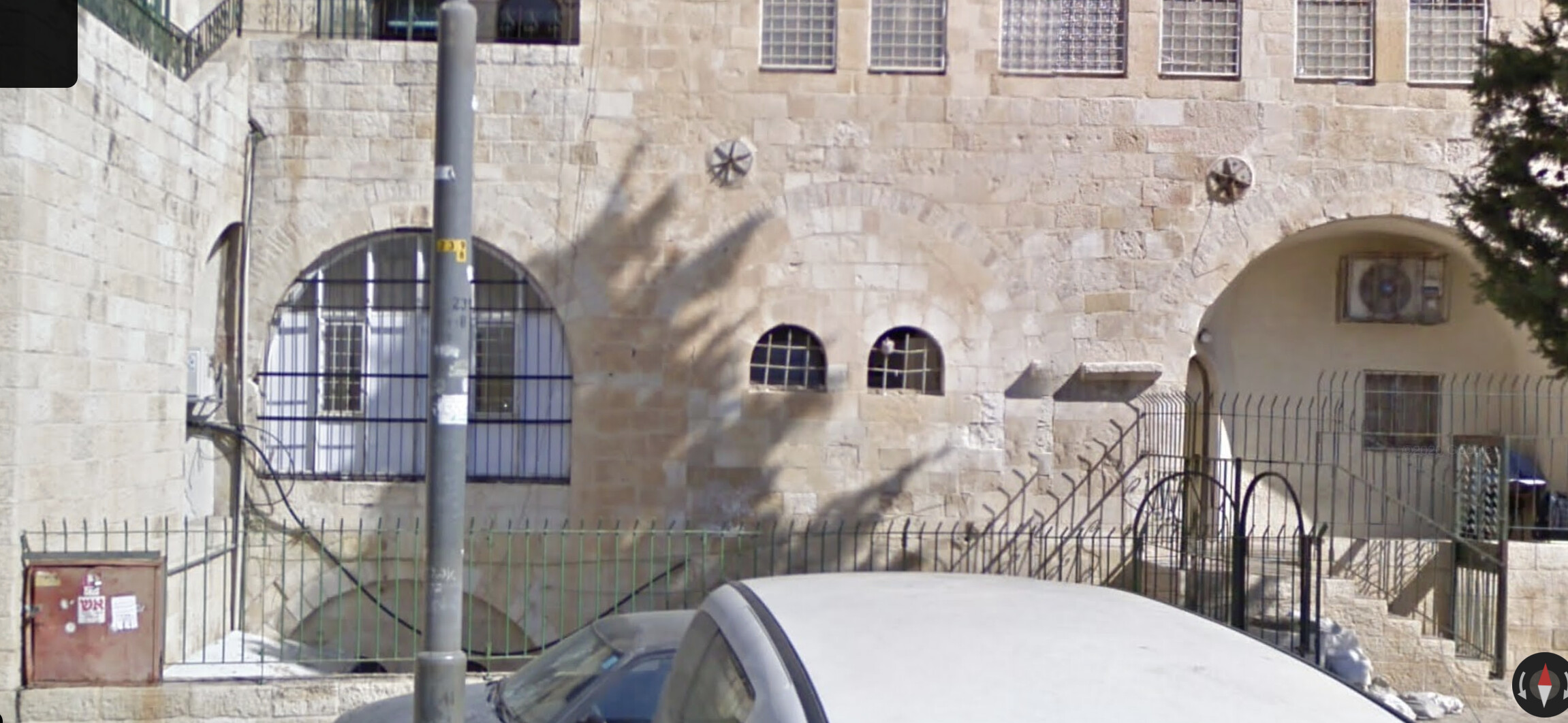
Last week during my therapy session, I had the sudden instinct to share my upbringing with my therapist in an unusual way – I pulled up Google street view in maps and showed her the school buildings I had attended and neighborhood I had grown up in.
I was surprised at how emotional I got, I started crying within a few seconds of pointing out the first school building.
“You can’t see the room I was in for first grade, because it’s below ground,” I finally found the words. “There were two windows for the classroom that opened to a courtyard below street level.”
“It looks like a prison,” she observed. “Why are there bars everywhere?”
I explained it was to keep the kids in and the terrorists out – every school in Israel has an armed security guard. “I’m not sure which of those two was the priority here, but I suspect it was the kids.”
Whereas Google regularly updates street view in other parts of the world, the footage hasn’t been updated since 2011. It’s as if Google doesn’t want to go back there either.
“I happen to know the building looks even worse now,” I told her. “They’ve put tarps over the bars so you can’t even see through them.”
I continue the tour, showing her all three buildings where I spent 11 years of my life.
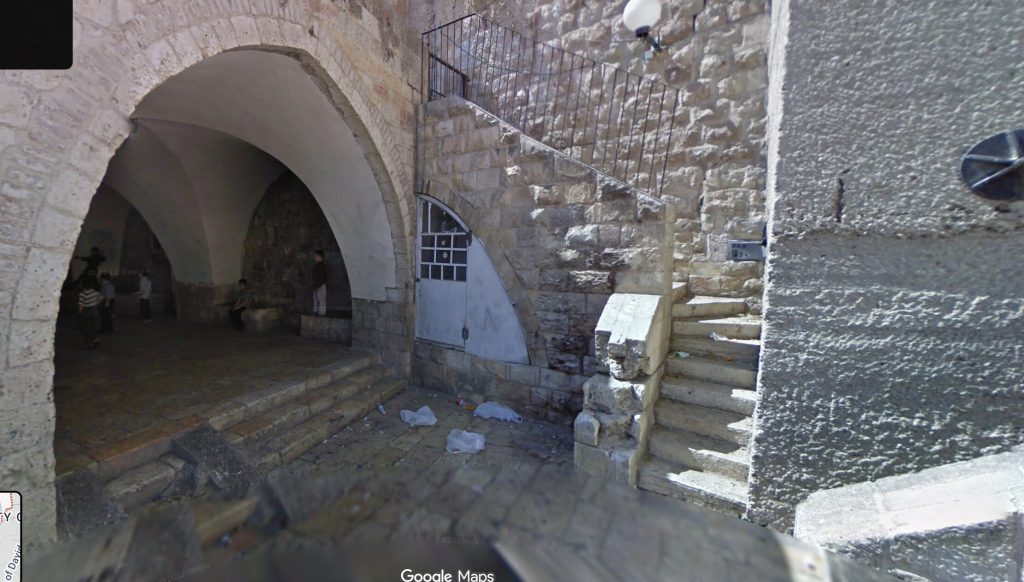
“This was where the community garbage room used to overflow, and trash would pile up right to the door of the school building.”
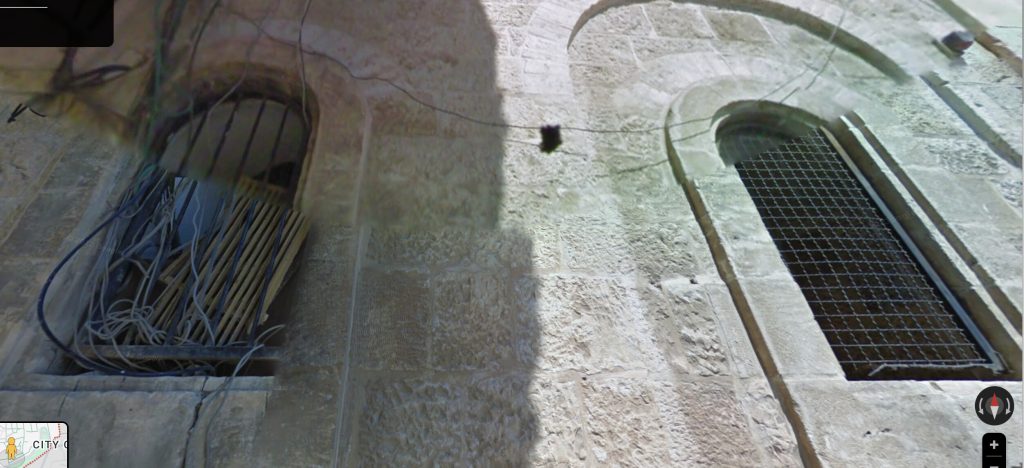
I showed her the window I sat beside, in 8th grade. It was covered in steel mesh, further contributing to the prison chic aesthetic. “But the window pane was broken, and during the winter I froze when I sat there. I ended up getting pneumonia.”
I showed her the kids crowding around the camera that was capturing all this. How we’d just empty out into the street and roam aimlessly during recess. How there were almost no trees or grass or any greenery.
“It all looks hard,” she observed. “Stone and cement.”
I showed her all the narrow alleys and tunnels, shrouded in shadows. How the houses were so close to each other that there wasn’t enough light even through the windows.
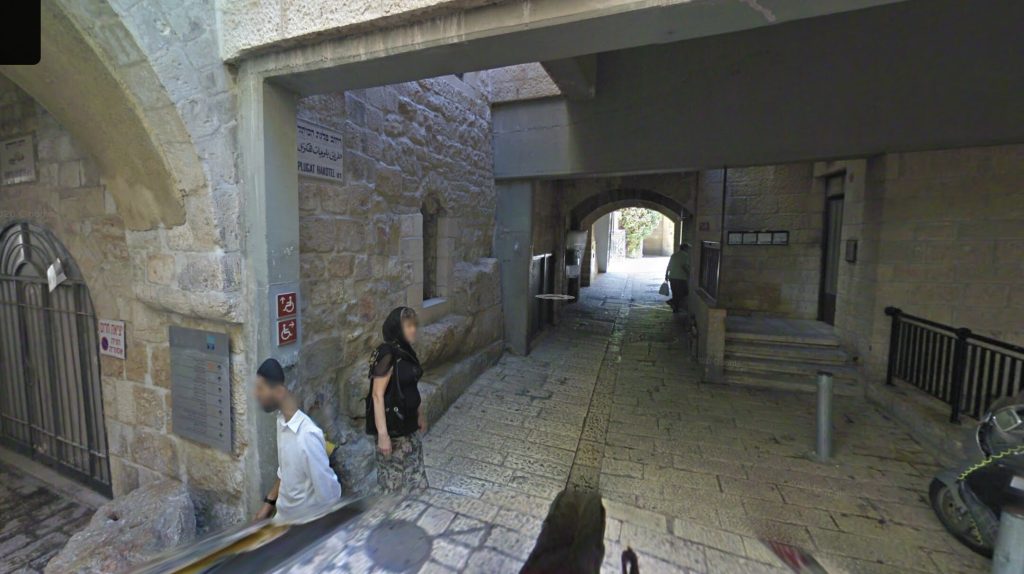
“Whenever I imagine the neighborhood I grew up in, I just imagine darkness.”
She had never seen anything like this, she said. Amanda from Newfoundland did not have context for Zilbermans or the Jewish Quarter.
I feel like I am endlessly showing. Telling. Explaining. Yet nothing I say can do justice to the darkness in my mind, the bars around my psyche. This Google Street View was another attempt.
“It feels oppressive,” she observed.
Did it land for me? Her words, her mirroring back to me what she was seeing? Not really. Maybe a little. Maybe nothing can. I guess the crying was a good sign, if nothing else.
I showed her the Muslim Quarter. How suddenly an imaginary line gets crossed and you’re in a mystical Arab bazaar, where you need to be worried for your safety and where plaques commemorate victims of past stabbings.
“Is it any wonder,” I concluded. “That I am so bitter? That I see the world in such a negative light?”
That was the theme of that week’s session. My negativity. Why can’t I see things more positively? Appreciate people’s efforts, or their partial successes? Why, my partner had recently asked, could I not mefargen – the modern Hebrew word that has no exact translation but which I roughly interpret as “adopt benevolent positivity towards others”?
Why indeed.
The answer, my subconscious informed me, was how bleak my childhood was. How black and white, but mostly black.
“It feels like a pressure on my brain,” I described it. “Like I am not allowed to think in certain directions. Like there’s a filter through which everything gets viewed, not as dark-colored glasses, but like a dark cloud between my eyes and my mind.”
I literally did not know what positivity looked like, even though at this point I was ready to adopt it.
“I can see all the ways in which being negative brings others around me down. How it makes me an ineffectual parent, a grouchy partner, a curmudgeony friend.”
“Please model positivity for me,” I requested. “What does it look like? Put me in your shoes, tell me how you see the world so I can try to see it too.”
She tried, but it did not stick. The picture she painted did not sound particularly positive to me.
For now, I have accepted that this is all my brain is capable of. That there is so much pain from my past inside me still, even if I am no longer as in-touch with it on a daily basis.
Maybe this is all the positivity I can muster? A hope for a better future? In my typical negative fashion, it doesn’t seem like that’s enough.
It’s the classic psychological bind – feeling negative about my negativity. At least I warned my therapist about this, so now she’s informed.